

The Time to Remember Water Is Now

As an artist, water has become more than a subject in my work—it has become a question, a concern, and increasingly, a call to action.
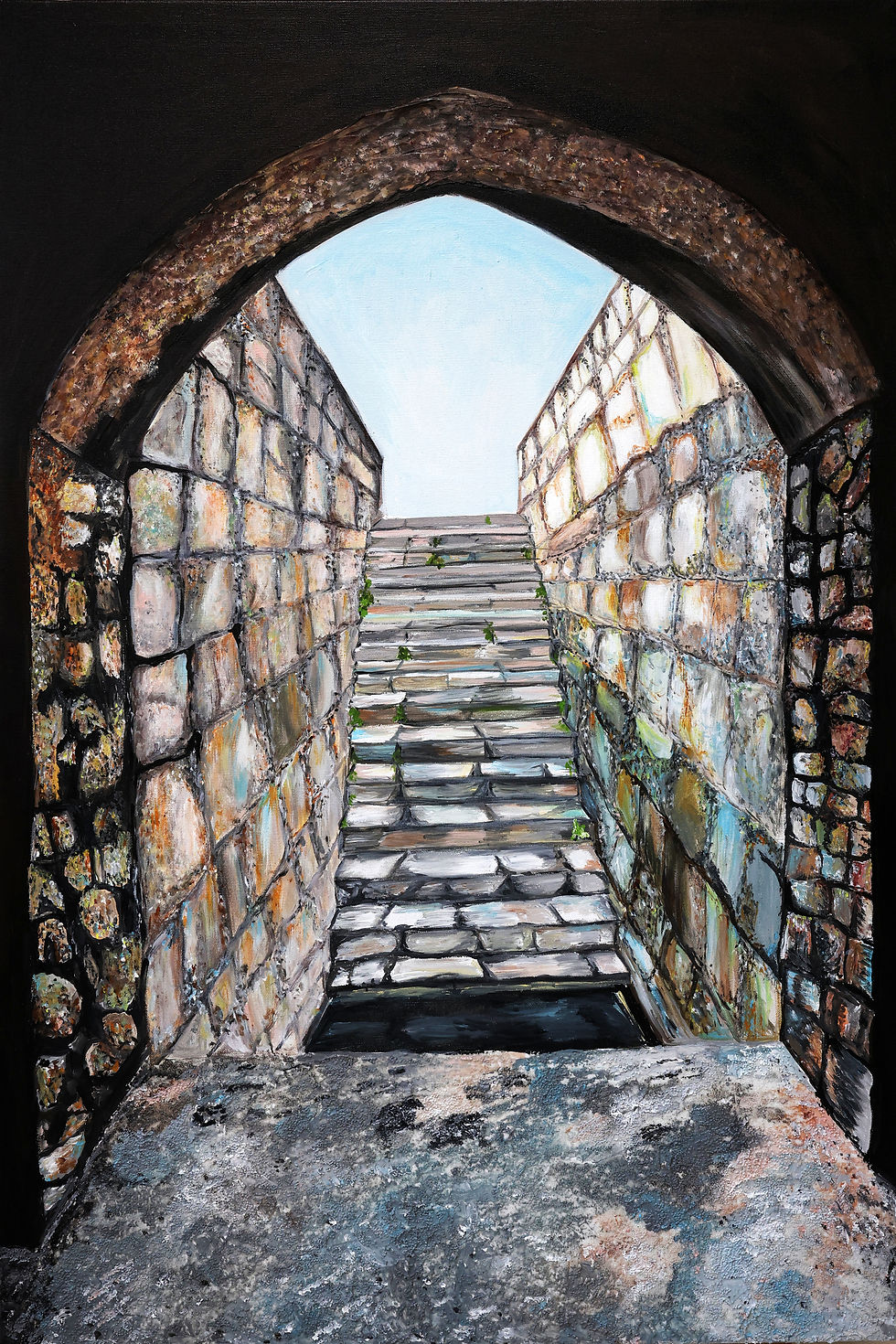
For several years, I have been researching and creating artworks inspired by India's magnificent stepwells. These extraordinary structures have captivated me not only for their architectural beauty, geometric complexity, and spiritual presence, but for what they represent: a profound understanding of water, community, and sustainability.
Today, that wisdom feels more relevant than ever.
Across India, we are witnessing the growing impact of climate uncertainty. This year, the monsoon has stalled, recording a significant rainfall deficit of nearly 41% below normal levels. Experts warn that intensifying El Niño conditions could continue to disrupt rainfall patterns and threaten agricultural productivity well into the season. Rising temperatures, prolonged dry spells, and shrinking water reserves are no longer distant warnings—they are realities unfolding before our eyes.
In Pune, where I live and work, the situation has become especially visible. With reservoir levels falling to critical levels due to delayed monsoon rains, the municipal corporation recently introduced alternate-day water supply to households and businesses in an effort to stretch available resources until late August.
Meanwhile, rivers recede. Lakes shrink. Ponds dry. Dams struggle to replenish. Water—the foundation of all life—has become increasingly fragile and uncertain.
In moments like these, I find myself returning to the stepwells.

Built centuries ago, across India, stepwells were remarkable feats of engineering and ecological intelligence. They were designed to harvest rainwater, recharge groundwater, provide reliable access during droughts, and create gathering spaces for communities. They reflected a deep respect for natural cycles and a sophisticated understanding of living within environmental limits.
These structures remind us that sustainability is not a new invention. It is an ancient practice.
Our ancestors understood that water was precious, finite, and sacred. They built systems that worked with nature rather than against it. Somewhere along our journey toward rapid modernization, many of these lessons were forgotten.
My ongoing Stepwells project is therefore not simply an exploration of history or architecture. It is an attempt to reconnect with a legacy of environmental wisdom. Through photography, research, and artwork, I seek to bring attention to these remarkable spaces and to the urgent questions they raise for our future.
What can these ancient structures teach us about resilience today?
How might we rethink water conservation in our cities and communities?
Can solutions to some of our most pressing environmental challenges be found by revisiting knowledge that has existed for centuries?
These questions continue to guide my artistic practice.
Every artwork in this collection is an invitation to reflect on our relationship with water—not merely as a resource, but as a shared responsibility. Art has the power to start conversations, and conversations have the power to inspire awareness, action, and change.
If this message resonates with you, I invite you to explore the Stepwells collection on my website. By bringing one of these works into your home or workplace, you become part of a larger dialogue about conservation, heritage, and environmental stewardship.
Every artwork becomes a conversation.
Every conversation spread awareness.
And every act of awareness contributes to a collective shift in how we value and protect the resources that sustain life.
The challenges before us are significant, but so is our capacity to learn, adapt, and act.
The stepwells still stand as silent reminders of what is possible when human ingenuity works in harmony with nature.
Perhaps the way forward begins by looking back.
Visit www.rashmighosh.art to explore the collection and join the conversation.

Because the time to remember water is now.


Comments